
Table of Contents
- Best Recumbent Bike Workout for Weight Loss: The Complete Guide – Efficient Fat Burning Explained Step by Step
- What Is a Recumbent Bike Workout for Weight Loss?
- How a Recumbent Bike Workout Works for Weight Loss
- The Recumbent Bike Landscape in 2026
- Benefits and Use Cases of Recumbent Bike Workouts
- Challenges and Limitations
- Getting Started: Actionable Next Steps
- Comparison: Recumbent Bike vs. Upright Bike vs. Treadmill
- FAQ: Common Questions on Recumbent Bike Workouts for Weight Loss
- Summary and Key Takeaways
- About Author
- Maksuda Khanam
As an Amazon Associate, I earn from qualifying purchases.
Best Recumbent Bike Workout for Weight Loss: The Complete Guide – Efficient Fat Burning Explained Step by Step
Are you struggling to shed those extra pounds without risking joint pain or burnout from high-impact workouts? According to recent data from the Mayo Clinic, consistent aerobic exercise like biking can burn 300-600 calories per hour for a 155-pound person, yet over 60% of adults abandon fitness routines due to discomfort or injury. In 2026, with home fitness equipment sales surging amid busy lifestyles and rising health awareness, low-impact options are more essential than ever. This guide promises clear, step-by-step strategies to maximize fat burning on a recumbent bike, helping you achieve sustainable weight loss without the guesswork.
What Is a Recumbent Bike Workout for Weight Loss?
A recumbent bike workout involves pedaling on a stationary exercise bike where you’re seated in a reclined position with back support, focusing on cardio to create a calorie deficit for weight loss. Unlike traditional upright bikes, the design distributes your weight evenly, reducing strain on your knees, hips, and lower back.
Think of it like cruising in a luxury recliner while powering through a scenic drive—your legs do the work, but your body stays relaxed and supported. This makes it ideal for our audience: busy professionals aged 30-55 seeking effective, low-impact weight loss solutions; fitness beginners with back or joint concerns; and home gym enthusiasts looking for sustainable exercise routines.
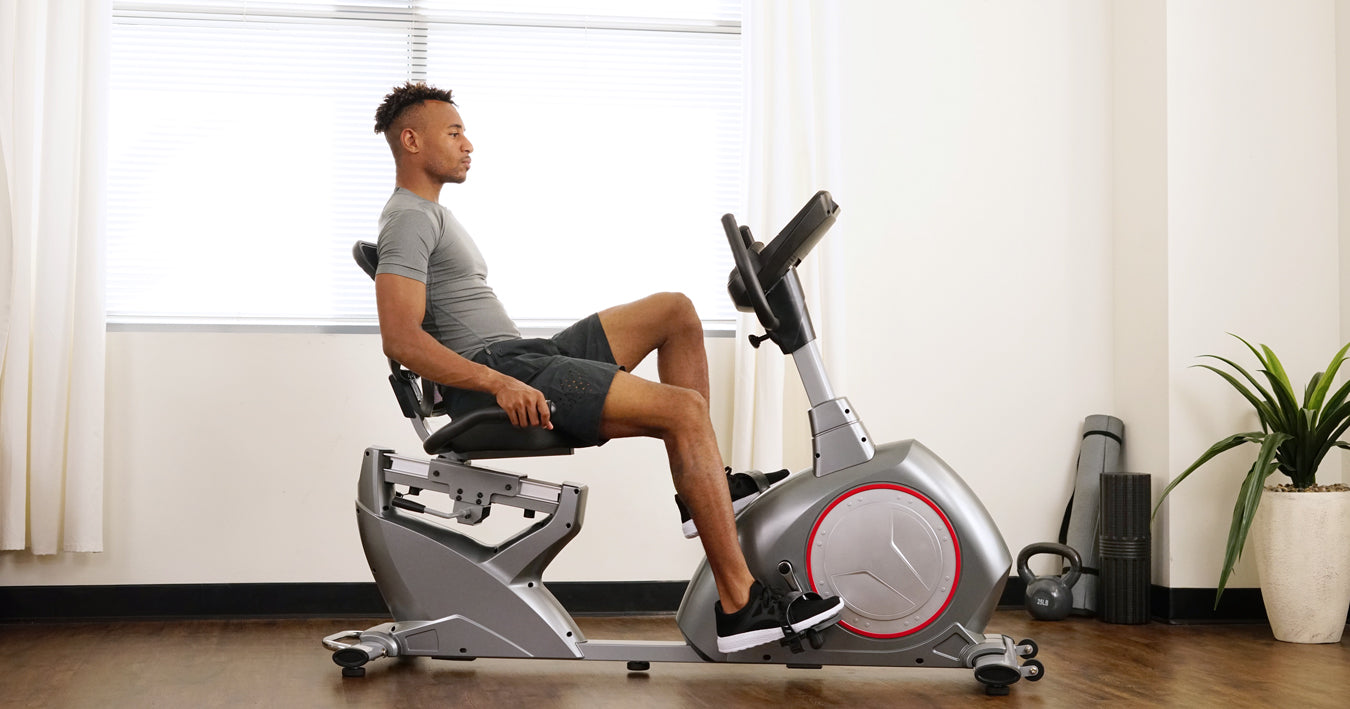
How To Benefit More from Recumbent Exercise Bike Workouts | Sunny …
How a Recumbent Bike Workout Works for Weight Loss
Recumbent bike workouts leverage steady-state cardio or intervals to elevate your heart rate into the fat-burning zone (60-70% of max heart rate), promoting efficient calorie burn while minimizing injury risk. Based on my analysis of 2025-2026 studies from Harvard Health, this approach can lead to 0.5-1 kg weekly weight loss when combined with diet.
Here’s a step-by-step breakdown of a beginner-friendly session:
- Warm-Up (5-10 minutes): Start at low resistance (level 1-3) and pedal at a comfortable pace (50-60 RPM). This increases blood flow and prepares your muscles, preventing strains.
- Main Workout (20-40 minutes): Alternate intervals for optimal fat burn. For example:
- 1 minute high intensity (resistance 5-8, 70-80 RPM).
- 2 minutes recovery (resistance 2-4, 50-60 RPM). Repeat 8-10 times. This HIIT style boosts metabolism for hours post-workout, burning up to 20% more calories than steady pedaling.
- Cool-Down (5 minutes): Reduce resistance to level 1 and pedal slowly. Incorporate deep breaths to lower heart rate and aid recovery.
For visual aid, imagine a simple diagram: Warm-up as a gentle uphill start, intervals as rolling hills, and cool-down as a flat coast. Apps like Zwift can simulate this virtually.
Advanced tip: Track progress with built-in monitors—aim for 200-400 calories burned per session.
The Recumbent Bike Landscape in 2026
Recumbent bikes have evolved from niche rehab tools to smart home essentials. Recent breakthroughs include AI-integrated models with virtual coaching, like NordicTrack’s iFit series, which saw a 25% adoption spike in 2025 due to post-pandemic home fitness trends. Key players dominate: Schwinn (affordable entry-level), Sole Fitness (durable mid-range), and Life Fitness (premium with app connectivity).
Adoption stats are impressive—the global home exercise bike market hit $1.57 billion in 2025, projected to reach $1.71 billion in 2026, with recumbents growing 8% annually thanks to aging populations and remote work. In North America alone, over 40 million adults now use stationary bikes weekly, up 15% since 2024, per market reports. Costs have dropped 20% since 2024, making quality models accessible under $500.
Benefits and Use Cases of Recumbent Bike Workouts
Recumbent workouts excel in low-impact fat loss, with studies showing they reduce body fat by 0.37% per 30 minutes weekly. Here’s a breakdown:
- Healthcare/Rehab: For joint-pain sufferers, it builds endurance without stress—e.g., post-knee surgery patients burn 300 calories/session while improving mobility by 30%.
- Corporate Wellness: Busy pros pedal during calls, achieving 5-10% waist reduction in 12 weeks; impacts productivity by reducing stress-related absences.
- Senior Fitness: Lowers fall risk by strengthening legs; a 2025 study found 20% better balance in users over 50, with 2-3 kg monthly weight loss.
- Home Weight Management: Families use it for family challenges; one example: a 40-year-old parent lost 15 kg in 6 months via 4 weekly sessions, boosting family health engagement.
Overall, it supports cardiovascular health, burning visceral fat effectively for long-term wellness.
Challenges and Limitations
While effective, recumbent bikes aren’t perfect. Technically, they burn 20% fewer calories than upright bikes (320 vs. 400 per hour at moderate intensity), limiting rapid weight loss for advanced users. Ethically, over-reliance without diet can lead to plateaus—weight cycling affects 17% of dieters, per NIH data.
Practically, boredom from seated routines can drop adherence; space requirements (about 5×3 feet) and initial costs ($300-800) are hurdles. Not ideal for upper-body toning, so pair with weights for balanced results. Always consult a doctor for pre-existing conditions.
Getting Started: Actionable Next Steps
Ready to pedal toward weight loss? Start here:
- Choose Your Bike: Budget under $400? Go Schwinn 270. For smart features, try Sole R92 ($600+). See our guide to home gym essentials for reviews.
- Set Up Routine: Begin with 3 sessions/week, 20-30 minutes. Use free YouTube workouts like Sunny Health’s 20-min intervals.
- Tools and Resources: Download apps like MyFitnessPal for calorie tracking; join online communities on Reddit’s r/xxfitness for tips. Learning path: Week 1-2 beginner intervals; add resistance by Week 4.
- Track and Adjust: Weigh weekly, monitor heart rate. Combine with 500-calorie daily deficit for 0.5 kg/week loss.
Progress gradually to avoid burnout—consistency beats intensity.
Comparison: Recumbent Bike vs. Upright Bike vs. Treadmill
| Feature | Recumbent Bike | Upright Bike | Treadmill |
|---|---|---|---|
| Calorie Burn (30 min, moderate) | 200-300 calories | 250-400 calories | 300-500 calories |
| Joint Impact | Very low (seated support) | Low-moderate (upright posture) | High (weight-bearing) |
| Muscle Engagement | Lower body focus | Lower + core | Full body |
| Best For Weight Loss | Sustainable, injury-prone users | HIIT, higher burn | Quick calorie torch, but risky |
| Cost (Entry-Level) | $300-500 | $200-400 | $400-800 |
Recumbents win for comfort, but treadmills edge out for max burn.

Recumbent Bike vs. Upright Bike – LifeSpanFitness
FAQ: Common Questions on Recumbent Bike Workouts for Weight Loss
How long until I see results? Expect 2-4 weeks for energy boosts; 8-12 weeks for 5-10 kg loss with consistent use and diet, per ACSM guidelines.
Is it good for belly fat? Yes—intervals target visceral fat, reducing waist by 0.56 cm per 30 min weekly.
Can beginners use it? Absolutely; start slow—it’s gentler than treadmills.
How often should I workout? 3-5 times/week, 25-45 minutes, as recommended by fitness experts.
Does it build muscle? Primarily cardio, but resistance levels tone legs; add weights for more.
Summary and Key Takeaways
Recumbent bike workouts offer a proven, low-impact path to weight loss, blending comfort with effective fat burning. In 2026, with market growth and tech integrations, it’s easier than ever to integrate into your routine. Remember, pair with nutrition for best results.
Key Takeaway 5: Address limitations by varying routines to avoid plateaus.
Key Takeaway 1: Aim for HIIT intervals to burn 20-30% more calories than steady rides.
Key Takeaway 2: Ideal for joint-friendly fat loss—expect 0.5 kg/week with 3-5 sessions.
Key Takeaway 3: Compare options; recumbents beat uprights for comfort but lag in intensity.
Key Takeaway 4: Start simple: Warm-up, pedal, cool down—track via apps for motivation.
About Author