Table of Contents
As an Amazon Associate, I earn from qualifying purchases.
Can You Pedal Backwards on an Elliptical Machine?
Can You Pedal Backwards on an Elliptical Machine? Yes, most modern elliptical machines allow backward (reverse) pedaling, which targets different muscles, boosts calorie burn, and adds workout variety.
Understanding Reverse Pedaling on Ellipticals
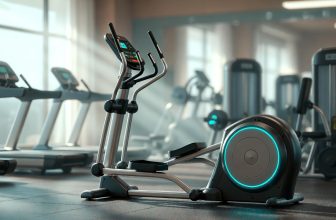
Elliptical trainers simulate walking or running with low joint impact. Reverse pedaling shifts emphasis from forward-dominant muscles, enhancing balanced lower-body development.
Most ellipticals support bidirectional motion due to flywheel design. Check your model’s manual—high-quality machines like those from NordicTrack or ProForm explicitly allow reverse direction for added versatility.
Muscles Worked: Forward vs. Backward Pedaling
Reverse pedaling alters muscle recruitment for a more comprehensive workout.
| Direction | Primary Muscles Targeted | Secondary Benefits |
|---|---|---|
| Forward | Hamstrings, glutes, quadriceps | Standard cardio focus |
| Backward | Quadriceps (especially rectus femoris), calves | Improved posture, core engagement |
- Key Insight from Research: A 2005 Willamette University study using electromyography (EMG) found significantly higher activity in the rectus femoris during backward striding, with minimal differences in other muscles like hamstrings or glutes.
- Backward motion often feels more challenging, engaging stabilizers for better balance and core activation.
Expert Quote: “Just the act of pedaling backwards will improve your elliptical posture and engage your core,” notes fitness experts from Boston Sports Medicine.
For joint health, reverse pedaling reduces knee strain while strengthening surrounding muscles, beneficial for those with osteoarthritis.
Benefits of Pedaling Backwards on an Elliptical
Incorporating reverse motion elevates standard elliptical workouts.
Key Advantages:
- Increased Calorie Burn: Unfamiliar movement raises heart rate. Analogous studies on backward locomotion show up to 50% higher heart rates at the same pace.
- Muscle Variety and Balance: Prevents imbalances by targeting quads and calves more intensely, reducing overuse injury risk.
- Enhanced Cardiovascular Endurance: Adds intensity without extra speed or resistance.
- Improved Joint Health: Low-impact reverse motion strengthens tendons around knees, potentially alleviating pain.
- Workout Variety: Combats boredom, ideal for interval training (e.g., alternate 2 minutes forward, 1 minute backward).
Statistics indicate ellipticals burn around 300-400 calories per 30 minutes forward; reverse intervals can increase this by 10-20% due to greater effort.
Learn more about elliptical benefits from Healthline’s guide on elliptical vs. treadmill.
How to Incorporate Reverse Pedaling Safely
Start gradually to avoid strain.
Tips for Effective Reverse Sessions:
- Warm up with 5-10 minutes forward pedaling.
- Begin with 1-2 minute reverse intervals at moderate resistance.
- Maintain upright posture; avoid leaning on handles to engage core.
- Alternate directions: Try 5 minutes forward, 2 minutes backward.
- Build to 20-30% of workout in reverse.
For HIIT enthusiasts, reverse bursts amplify intensity.
Consult resources like the American Council on Exercise (ACE) for proper form.
FAQ
Can all elliptical machines go backwards?
Most modern models yes, but older or basic ones may not. Verify your machine’s capabilities.
Does backward pedaling burn more calories?
Yes, due to higher heart rate and muscle engagement—often 10-20% more than forward at the same intensity.
Is reverse pedaling better for knees?
It can strengthen knee-supporting muscles and reduce strain, making it helpful for joint issues.
Which muscles does backward elliptical target most?
Primarily quadriceps (rectus femoris) and calves, with added core and balance work.
How often should I pedal backwards?
Incorporate 20-30% of your session for balance; alternate directions weekly.
Final Thoughts
Reverse pedaling transforms elliptical workouts from routine to dynamic, promoting muscle balance, higher calorie burn, and joint protection. Supported by EMG studies and expert insights, this simple switch maximizes low-impact cardio. Experiment safely and track progress for optimal results. For personalized advice, consult a fitness professional.
About Author