Table of Contents
- Are Treadmill Motors Ac or Dc?
- Types of Treadmill Motors
- DC Treadmill Motors
- AC Treadmill Motors
- Key Differences Between AC and DC Treadmill Motors
- Advantages and Disadvantages of Treadmill Motors
- Pros and Cons of DC Motors
- Pros and Cons of AC Motors
- Choosing the Right Treadmill Motor for Your Needs
- FAQ
- Final Thoughts
- About Author
- Maksuda Khanam
As an Amazon Associate, I earn from qualifying purchases.
Are Treadmill Motors Ac or Dc?
Are Treadmill Motors Ac or Dc? Treadmill motors are typically DC (direct current) for home models due to their quiet operation and energy efficiency, while AC (alternating current) motors dominate commercial treadmills for superior durability in extended use.
Types of Treadmill Motors
Treadmill motors power the belt’s movement, converting electrical energy into mechanical force. They fall into two categories: AC and DC, each suited to different usage scenarios.
DC Treadmill Motors
DC motors use direct current, similar to battery power, providing steady electron flow for smooth operation. Common in home treadmills, they range from 2.0 to 4.0 HP, with 3.0 HP being ideal for regular jogging. These motors excel in variable speed control, adjusting quickly via electronic controllers.
- Energy Use: Consume 20-30% less power than AC counterparts by drawing only needed electricity.
- Noise Levels: Operate at under 60 decibels, making them suitable for apartments.
- Maintenance: Require periodic brush checks, lasting 5-7 years with average home use.
For detailed specs on DC motors, check Wikipedia’s Electric Motor page.
AC Treadmill Motors
AC motors rely on alternating current, reversing direction 50-60 times per second for robust performance. Favored in gyms, they handle continuous duty cycles, often rated at 3.0-5.0 HP for heavy loads.
- Durability: Withstand 8-10 hours of daily use, outlasting DC motors by 2-3 years in high-traffic settings.
- Torque Output: Deliver 15-20% higher starting torque, supporting users up to 400 pounds at inclines.
- Cooling Needs: Use fans or belts for heat dissipation, increasing overall size.
Explore AC motor applications on TreadmillReviews.net.
Key Differences Between AC and DC Treadmill Motors
Understanding AC vs DC treadmill motors helps in selecting the right model. Here’s a comparison:
| Feature | DC Motors | AC Motors |
|---|---|---|
| Power Source | Direct current (steady flow) | Alternating current (cyclic) |
| Typical Use | Home/residential (80% of market) | Commercial/gym (preferred for 6+ hours daily) |
| Efficiency | Higher, up to 85% energy savings | Lower, constant draw |
| Noise | Quieter (50-60 dB) | Louder (65-75 dB) |
| Cost | $200-500 cheaper | Higher upfront |
| Lifespan | 5-8 years home use | 8-12 years commercial use |
| Speed Response | Faster adjustments | Slower, more stable |
Statistics show the global treadmill market reached $3.66 billion in 2024, with motorized models (including both AC and DC) holding 67.79% share. Residential DC models dominate North America, accounting for 39.47% of global sales.
To visualize, here’s a diagram of a typical DC treadmill motor:

The Treadmill Engineer: Treadmill Motors Part 1 – How do they work?
And an AC motor control schematic for comparison:
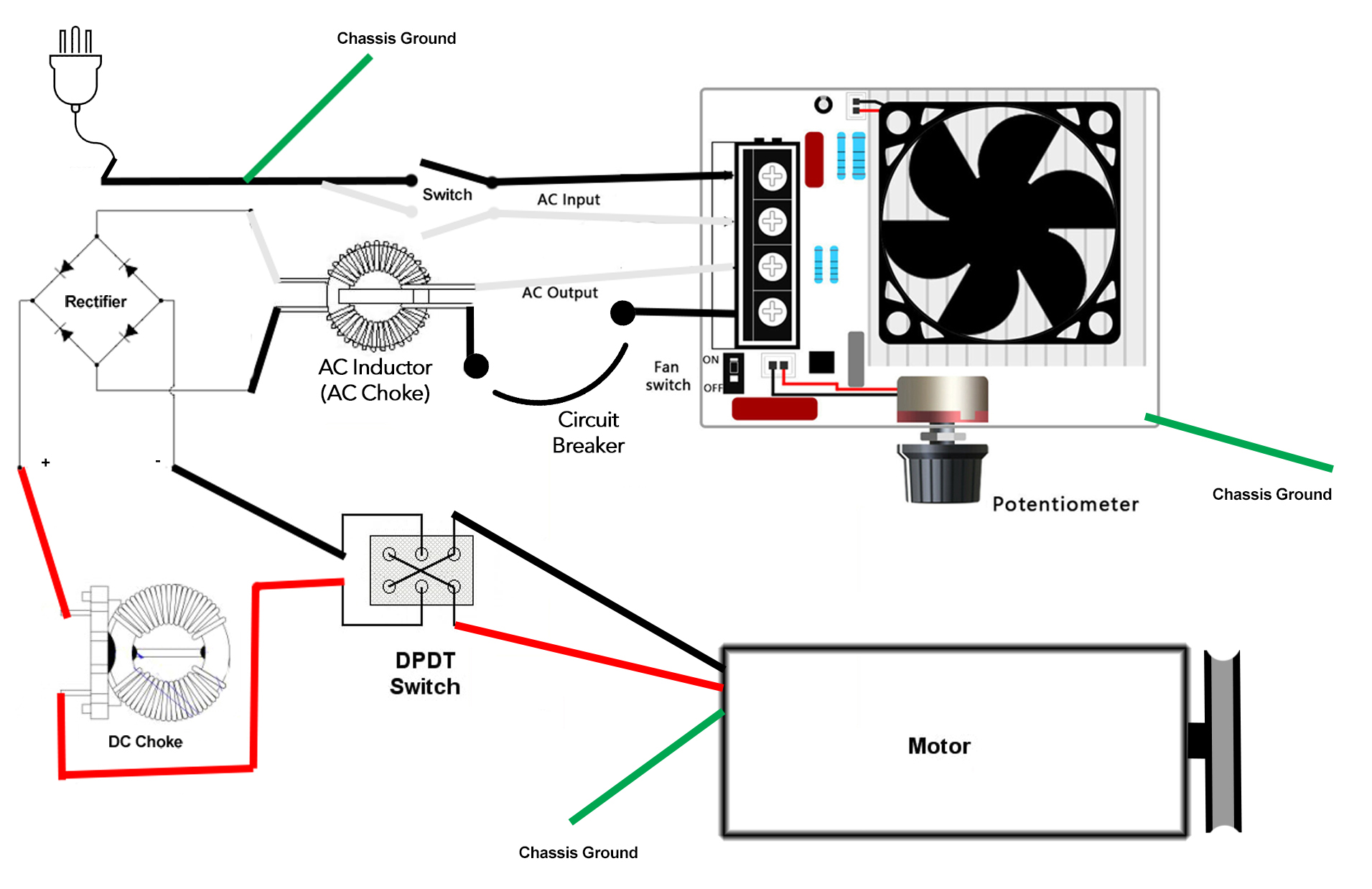
DazeCars, Upgrading shop tools for variable speed
Advantages and Disadvantages of Treadmill Motors
Pros and Cons of DC Motors
Pros:
- Quiet Operation: Ideal for home environments, reducing noise pollution.
- Energy Efficiency: Lower electricity bills, with variable power draw.
- Quick Response: Smooth speed changes for interval training.
Cons:
- Limited Durability: Not suited for marathon sessions; recommend 20-minute breaks after 50 minutes.
- Maintenance: Brushes wear out faster, needing replacement every 2-3 years.
Pros and Cons of AC Motors
Pros:
- High Torque: Better for heavy users and steep inclines.
- Longevity: Minimal maintenance, built for commercial demands.
- Consistent Performance: Handles non-stop use without overheating.
Cons:
- Noisier: Buzzing or whining sounds, less ideal for quiet spaces.
- Higher Energy Use: Draws constant power, increasing costs.
For expert insights on motor selection, visit CSM Fitness.
Choosing the Right Treadmill Motor for Your Needs
For home workouts under 1 hour daily, opt for a DC treadmill motor rated at least 2.5 HP. Commercial settings demand AC motors for reliability. Consider user weight: DC handles up to 300 pounds efficiently, while AC supports heavier loads. Budget-wise, DC models start at $500, versus $1,000+ for AC.
In 2024, 58% of consumers preferred DC for home use due to cost savings. Always check warranty—DC motors often cover 5 years, AC up to 10.
Learn more about treadmill buying guides from Sparnod Fitness.
FAQ
Are all treadmill motors DC? No, home treadmills mostly use DC motors, while commercial ones favor AC for durability.
Which is better, AC or DC treadmill motor? DC for home: quieter and efficient. AC for gyms: more powerful and long-lasting.
Can I convert a DC treadmill to AC? It’s not recommended; it requires rewiring and new controllers, costing more than buying a new unit.
How much HP do I need in a treadmill motor? 2.0-3.0 HP for walking/jogging; 3.0+ for running or multiple users.
Do AC treadmill motors use more electricity? Yes, up to 30% more due to constant current draw.
Final Thoughts
Selecting between AC and DC treadmill motors hinges on usage—prioritize DC for home efficiency or AC for commercial robustness. With the market projected to hit $5.8 billion by 2033, advancements like quieter AC designs are bridging the gap. Invest wisely for long-term fitness gains.
About Author